
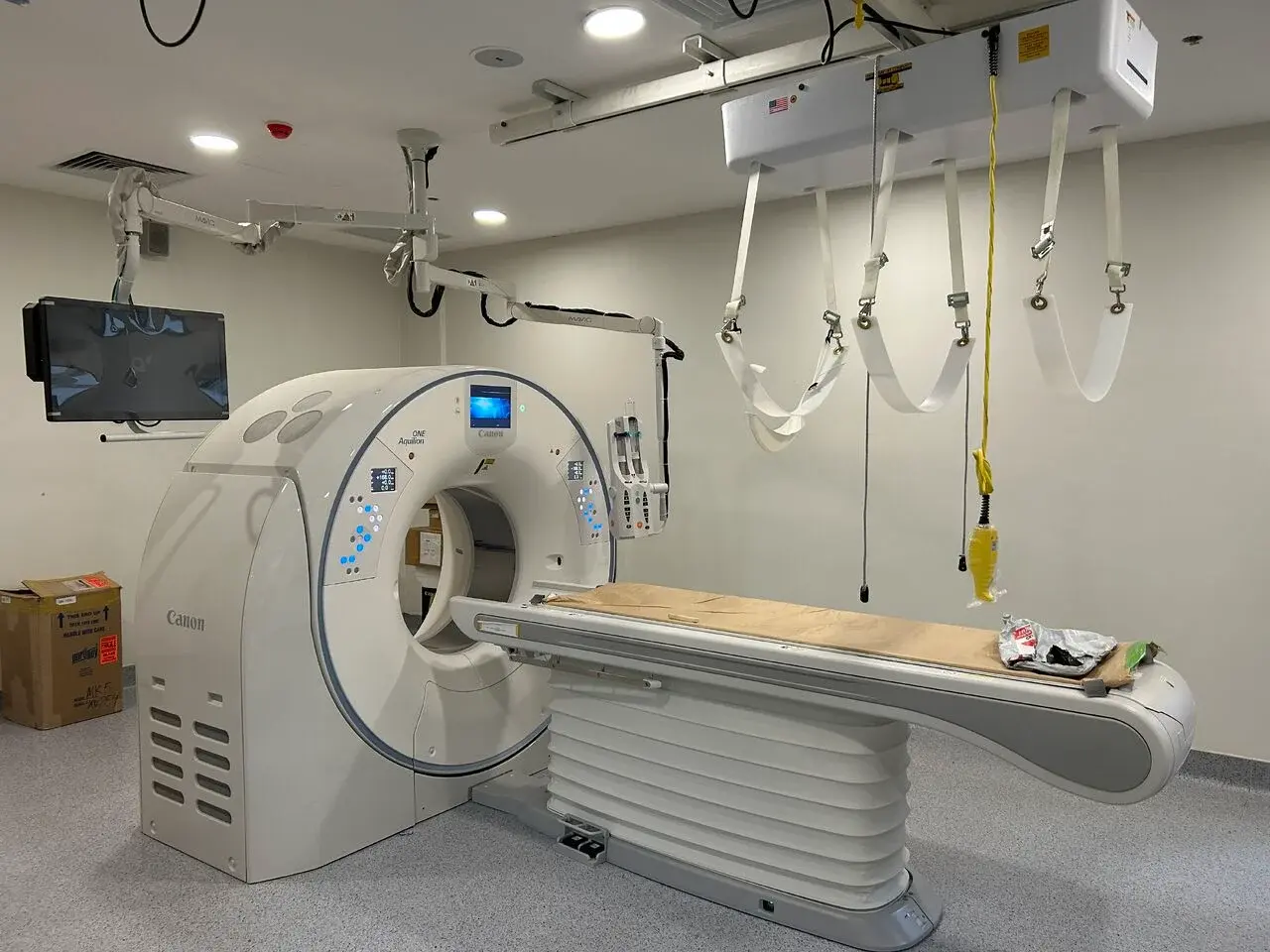
Installing an MRI system is a highly coordinated process that involves much more than positioning the scanner inside a room. From RF shielding and room construction to magnet delivery, installation and testing, every stage requires careful planning and coordination.
An important part of this process is the RF-shielded MRI room, which helps protect the MRI system from external radio-frequency interference and supports the production of high-quality diagnostic images.
For healthcare facilities planning an MRI installation, understanding these technical requirements early can help ensure that the room, infrastructure and equipment are properly coordinated.
What Is an RF-Shielded MRI Room?
An RF-shielded room is a specialised enclosure designed to reduce radio-frequency interference around the MRI system.
MRI systems are highly sensitive to radio-frequency signals. External RF interference can affect image quality, which is why the MRI examination room is typically enclosed within a specially constructed RF-shielded cabin.
The shielding enclosure can incorporate conductive materials such as copper or other engineered shielding systems, depending on the manufacturer's requirements and project design.
The RF cabin forms an important part of the overall MRI room planning and installation process.
Why Does an MRI Need RF Shielding?
MRI systems use radio-frequency signals as part of the imaging process. Unwanted external RF signals can interfere with the system and potentially affect the quality of the resulting images.
An appropriately designed RF shield helps reduce this external interference.
The effectiveness of the shielding depends on the complete enclosure, not simply the material used.
This means that particular attention needs to be given to:
- Shielding panels
- Panel joints
- Connections
- Seams
- Doors
- Penetrations
- Electrical interfaces
- Ventilation pathways
- Other openings within the enclosure
A small gap or incorrectly installed component can affect the integrity of the RF shield.
Precision Is Critical During RF Cabin Construction
Constructing an MRI RF cabin requires a high degree of precision.
The individual shielding panels need to be properly installed and connected to create a continuous shielding enclosure. Specialised doors and service penetrations also need to be coordinated carefully.
The installation process can involve checking:
- Panel alignment
- Joints and connections
- Shielding continuity
- Specialised RF doors
- Service penetrations
- Electrical and mechanical interfaces
- Ventilation arrangements
The exact construction method and testing requirements depend on the MRI system, shielding manufacturer and project specifications.
MRI Room Planning Starts Before Equipment Delivery
One of the most important aspects of MRI room planning is identifying equipment and infrastructure requirements before the MRI system arrives at the healthcare facility.
An MRI installation can influence:
- Room dimensions
- Structural requirements
- RF shielding
- Electrical infrastructure
- HVAC and cooling
- Equipment access
- Magnet delivery routes
- Patient and staff workflow
- Safety requirements
- Equipment maintenance access
These requirements need to be coordinated during the design and construction stages.
Waiting until the MRI arrives to address these requirements can create significant project challenges.
Delivering and Installing the MRI Magnet
An MRI magnet is a substantial piece of equipment and can weigh several tonnes.
Transporting and positioning the magnet therefore requires detailed planning.
Before delivery, the project team may need to consider:
- Delivery access
- Building entrances
- Door dimensions
- Lifting requirements
- Floor loading
- Transportation routes
- Crane or specialised lifting arrangements where required
- Final positioning inside the MRI room
The delivery and lifting plan needs to be coordinated with the equipment supplier and relevant project teams.
Structural Planning for MRI Installation
The weight and physical dimensions of the MRI system need to be considered during the structural planning stage.
The project team may need to evaluate:
- Floor loading capacity
- Equipment support requirements
- Delivery routes
- Lifting points
- Installation access
- Structural constraints
Identifying these requirements early allows architectural and structural teams to incorporate them into the facility design.
MRI Infrastructure and Building Services
MRI systems also have specific infrastructure requirements.
Depending on the system and manufacturer, planning may need to consider:
Electrical Systems
The MRI system requires an appropriate electrical supply and supporting infrastructure. Power requirements should be coordinated with the equipment manufacturer's specifications and the hospital's electrical design.
HVAC and Cooling
Temperature and environmental conditions can be important for MRI equipment operation. The facility's HVAC and cooling systems therefore need to accommodate the requirements specified for the MRI system.
Quench and Safety Considerations
MRI systems using superconducting magnets can also require specialised safety planning, including consideration of the quench system and associated venting requirements.
These requirements need to be addressed during the design stage in accordance with the equipment manufacturer's specifications and applicable standards.
RF Shield Testing and Certification
Before the MRI magnet is installed, the RF-shielded enclosure needs to be checked to confirm that it meets the required performance criteria.
Testing helps verify the integrity and effectiveness of the RF shielding installation.
Only after the relevant shielding requirements have been successfully addressed can the project progress to subsequent installation stages.
This highlights why the sequence of work is important in an MRI installation project.
From RF Cabin Construction to MRI Commissioning
A typical MRI installation process can involve several interconnected stages:
MRI Planning → Room Design → RF Shielding Installation → RF Shield Testing → Magnet Delivery → Magnet Installation → Equipment Assembly → System Testing & Commissioning → Operational Readiness
Each stage depends on successful coordination of the previous stages.
This is why MRI installation is a multidisciplinary process involving healthcare planners, equipment manufacturers, architects, structural engineers, MEP teams, shielding specialists and other project stakeholders.
The Role of Medical Equipment Planning
Medical Equipment Planning provides an important connection between the clinical requirements of the healthcare facility and the technical requirements of the MRI system.
The planner needs to understand not only the equipment itself but also how it interacts with the building.
This includes considering:
- Clinical requirements
- Room planning
- Equipment specifications
- Infrastructure requirements
- RF shielding
- Structural requirements
- Equipment delivery
- Installation
- Testing and commissioning
- Operational readiness
By identifying these requirements early, project teams can coordinate the MRI installation with the wider healthcare facility development.
Why Early MRI Planning Matters
MRI installation involves multiple technical dependencies. Decisions made during the planning stage can affect the building design, infrastructure and installation process.
Early planning can help project teams identify potential challenges related to:
- Space
- Structural loading
- RF shielding
- Equipment access
- Electrical systems
- HVAC
- Magnet transportation
- Installation sequencing
- Safety requirements
This makes MRI room planning an important part of healthcare facility development.
Hanimed's Approach to MRI Equipment Planning
At Hanimed, medical equipment planning considers the technical and operational requirements of healthcare technology throughout the project lifecycle.
For MRI projects, this includes coordinating equipment requirements with room planning, infrastructure, shielding, delivery, installation and testing and commissioning.
The objective is to help healthcare facilities prepare the right environment for their medical equipment and ensure that the different stages of implementation are properly coordinated.
Conclusion
An MRI installation is a complex process that begins well before the magnet enters the healthcare facility.
From the construction and testing of the RF-shielded cabin to the delivery, lifting and installation of the MRI magnet, each stage requires careful planning and coordination.
The RF shielding, structural requirements, building services, equipment access and safety considerations all form part of the wider MRI room planning process.
Effective medical equipment planning helps connect these technical requirements with the overall healthcare project, supporting a coordinated path from initial planning through installation, testing and operational readiness.
At Hanimed, we coordinate the technical and practical considerations involved in healthcare equipment planning to help facilities prepare for the successful implementation of advanced medical technologies.
